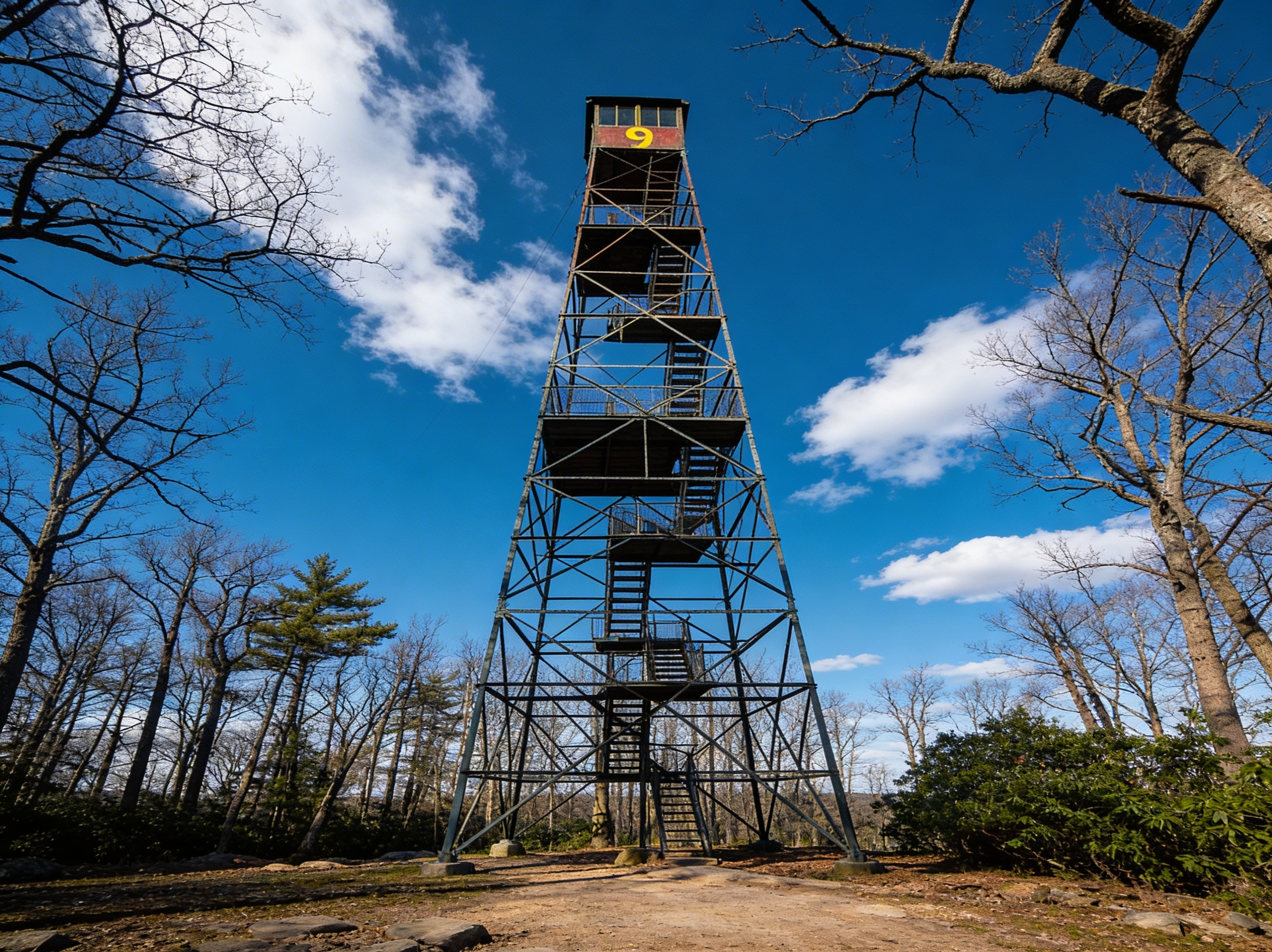
Allegheny National Forest Hiking Guide: Trails, Dark Skies & Backcountry Camping
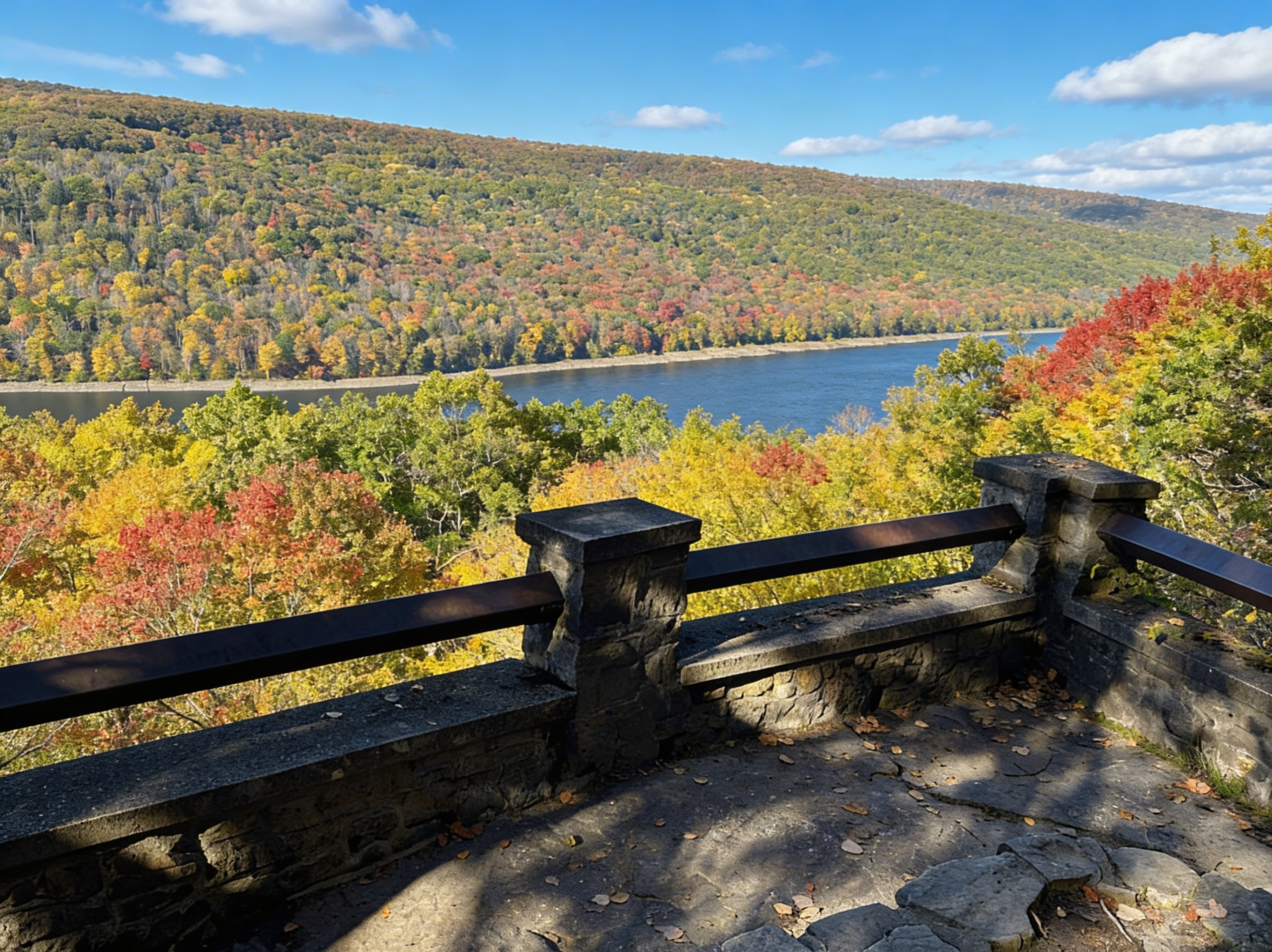
Quick Facts
- Location: Northwestern PA (Warren, McKean, Forest, Elk counties)
- Size: 517,000+ acres (PA’s only National Forest)
- Best Season: Fall (foliage), Summer (reservoir activities)
- Top Trails: Minister Creek (backpacking), Rimrock (overlook), North Country Trail
- Unique: Dispersed camping allowed, dark skies, Allegheny Reservoir
The tourism boards will tell you about the “peaceful woodlands,” but the reality of the Allegheny National Forest (ANF) is sheer scale. This is Pennsylvania’s only National Forest, covering over half a million acres of plateau, deep river valleys, and massive sandstone rock formations.
Unlike the compact state parks of the Poconos or the Laurel Highlands, the ANF is vast. It’s a place where you can hike for days on the North Country Trail without seeing a road, or pull your car off a forest service road and camp for free under some of the darkest skies in the East.
This isn’t a manicured park. It’s a wilderness playground that rewards self-sufficiency.
Why Hike the Allegheny National Forest?
The main draw here is freedom. In most PA State Parks, you’re confined to designated campgrounds. In the ANF, dispersed camping is legal almost everywhere. This opens up a level of adventure that is hard to find elsewhere in the state.
The terrain is also unique. You have the massive Allegheny Reservoir (known locally as “Kinzua”) cutting through the forest, creating a shoreline that feels more like the Pacific Northwest than Pennsylvania. You have “rock cities” - massive clusters of house-sized boulders left behind by geology - at places like Minister Creek and Rimrock. And you have sections of old-growth forest that have stood for centuries.
The Trails: Choose Your Adventure
With hundreds of miles of trails, it’s hard to know where to start. Here is a breakdown by hiking style.
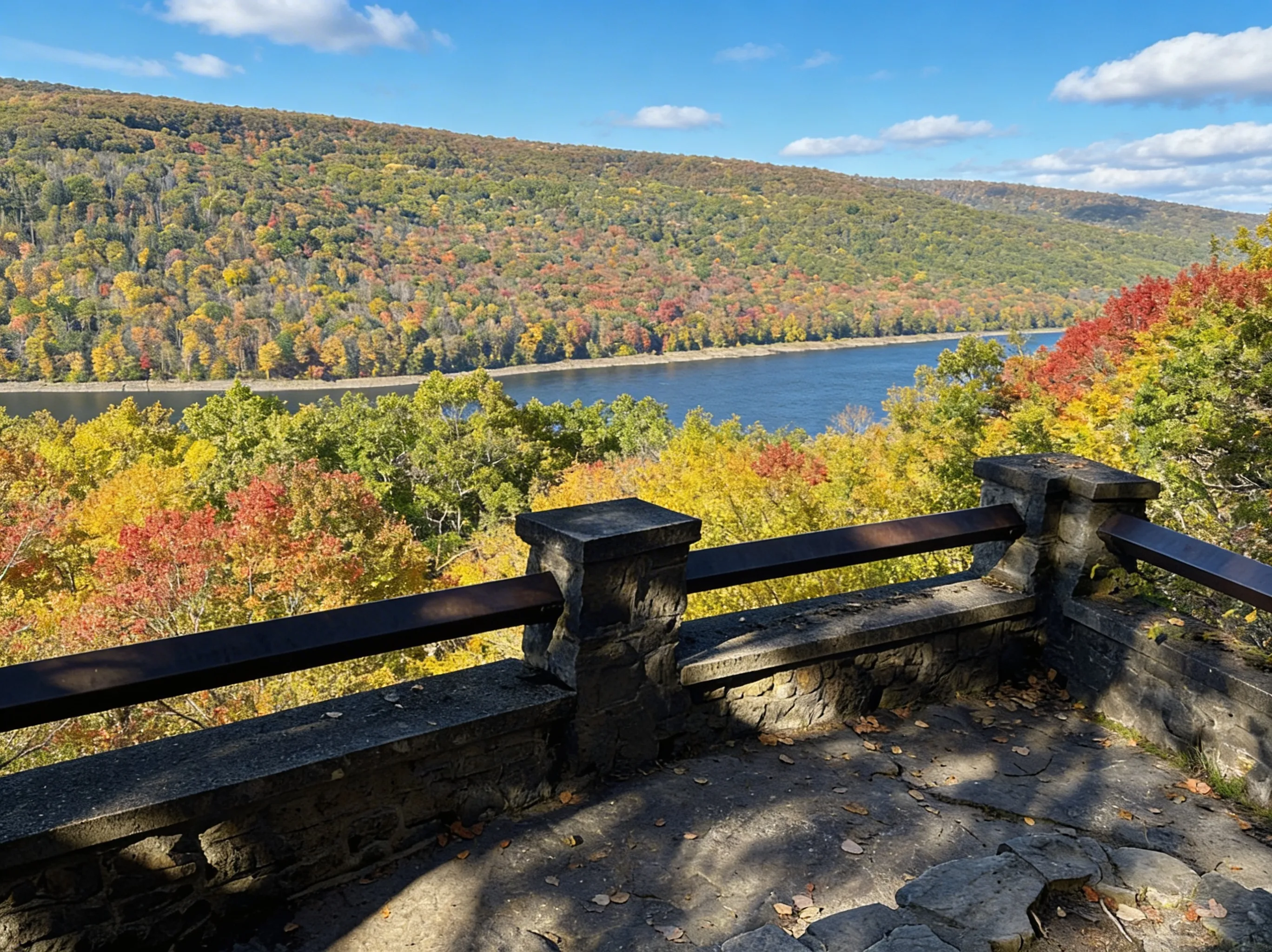
If You Want an Overlook: Rimrock Trail
- Distance: 1.3 miles
- Elevation: 200 ft gain
- Time: 45 minutes to 1 hour
- Difficulty: Easy to moderate (stone steps)
- Trailhead: Rimrock parking area off Forest Road 262
- Best Time: Late afternoon for sunset (mid-October for fall foliage)
- The Draw: Best sunset spot in the forest, massive rock formations, Allegheny Reservoir views
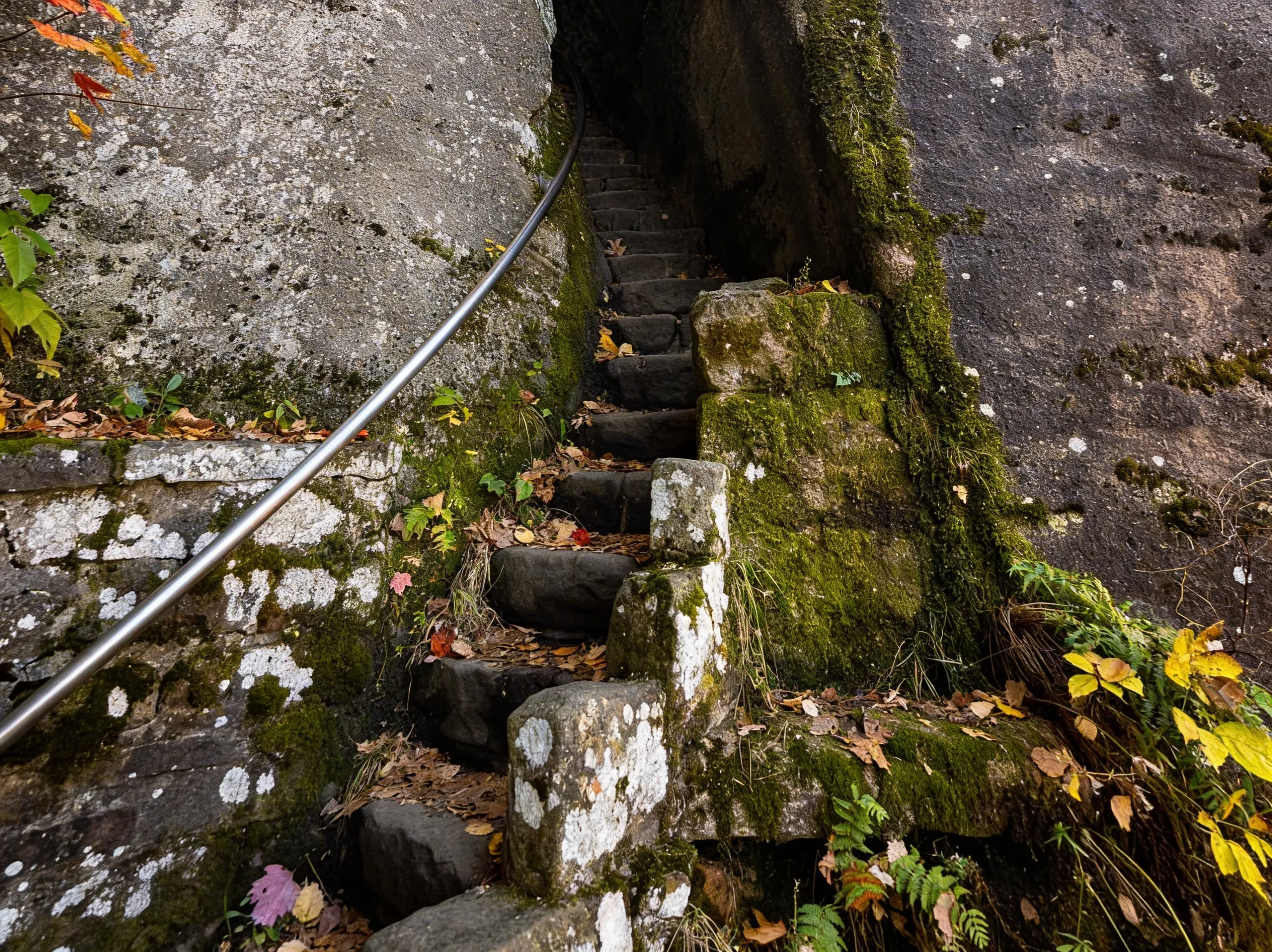
Rimrock is the most iconic overlook in the forest. You can drive almost to the top, but the best experience is hiking the trail through the massive rock formations. Stone steps lead you down through narrow crevasses in the sandstone, dumping you out onto a viewing platform that hovers over the reservoir.
⚠️ Warning: The stone steps can be icy in winter and slippery after rain. Watch your footing.
Pro Tip: Arrive 30 minutes before sunset. The parking lot is small (holds ~15 cars) and fills fast on nice weekends.
If You Want Backpacking: Minister Creek Trail
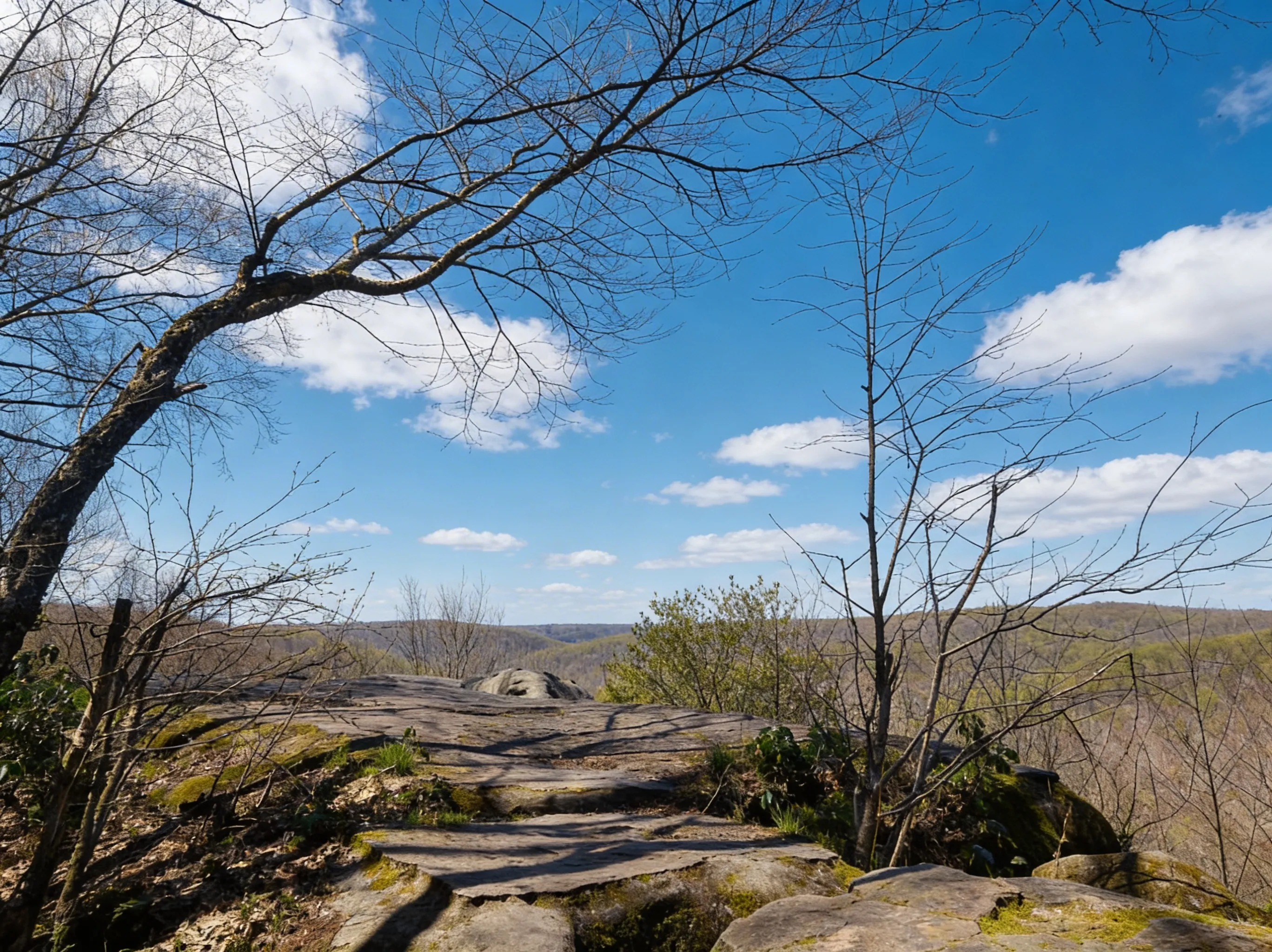
- Distance: 6.6 miles loop
- Elevation: 800 ft gain
- Time: 3-4 hours (day hike), overnight recommended
- Difficulty: Moderate (rocky terrain, stream crossings)
- Trailhead: Minister Creek Campground off PA Route 666
- Best Time: Late spring (wildflowers), fall (foliage, mid-October)
- Water: Minister Creek (filter required)
- Campsites: Triple Forks area (where North Country Trail intersects)
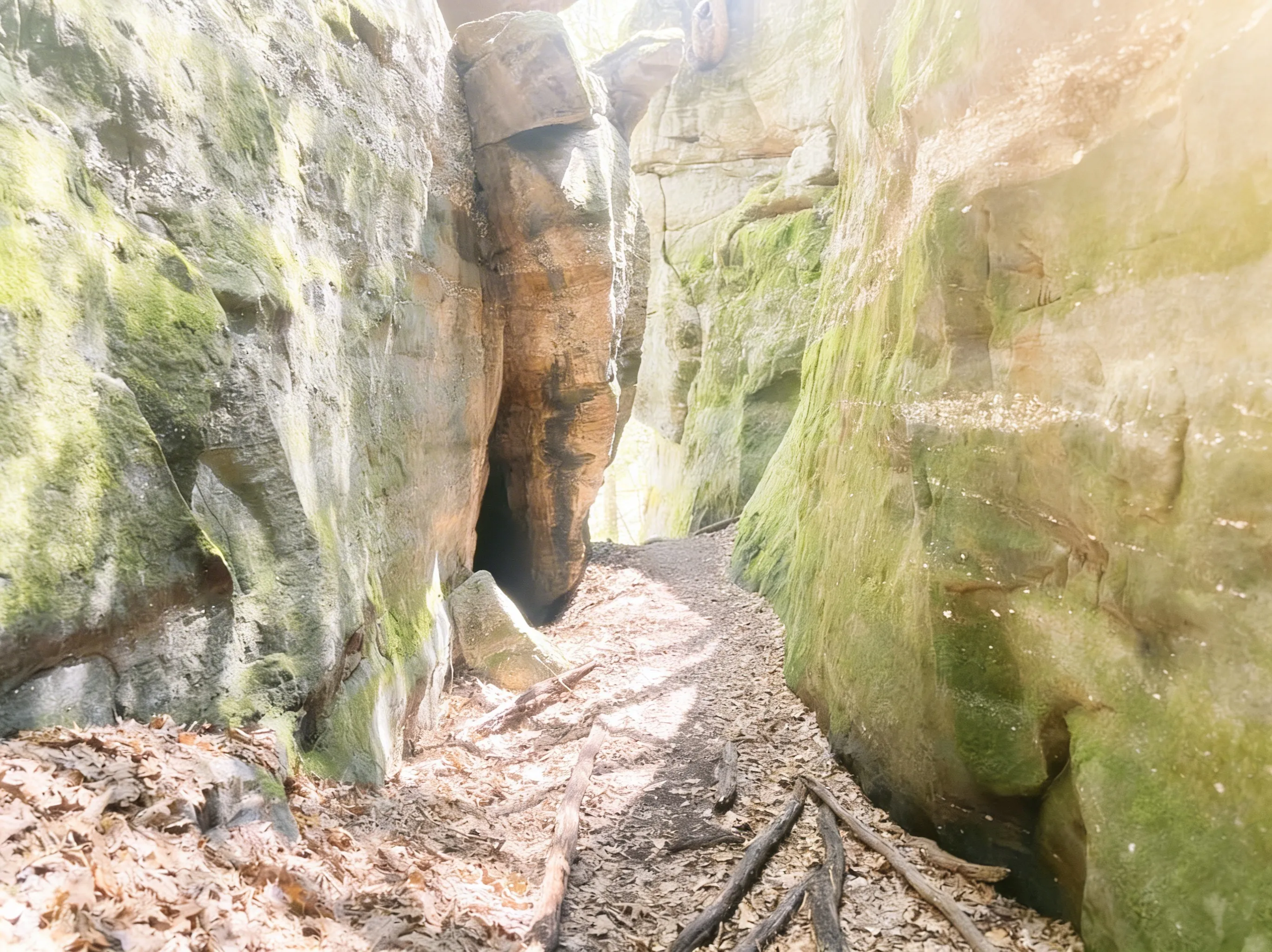
This is the quintessential ANF hike. The trail climbs through giant boulders to an overlook of the Minister Creek valley, then descends to “Triple Forks” where the creek splits. It’s a perfect first backpacking trip, but be warned: parking fills fast on weekends. Arrive by 9 AM or plan for a midweek trip.
If You Want Solitude: Hickory Creek Wilderness
- Distance: 12-mile loop
- Elevation: 600 ft gain
- Time: 6-8 hours (day hike), overnight recommended
- Difficulty: Moderate (faint trail, navigation required)
- Trailhead: Hearts Content Scenic Area
- Best Time: Late spring, fall
- The Draw: Designated Wilderness Area (no machines). True backcountry experience.
If you really want to disappear, this is the spot. As a Federally Designated Wilderness Area, no machines (even bicycles) are allowed. The trail is marked only by sparse blazes, and the tread can be faint. Bring a map and compass - this is real backcountry.
If You Want Distance: North Country Trail
- Distance: ~100 miles through ANF
- Elevation: Varies (rolling terrain, 200-600 ft gains per section)
- Time: 5-7 days for full ANF section
- Difficulty: Varies (moderate to strenuous)
- Access: Multiple trailheads (Tracy Ridge, Minister Creek, Tionesta)
- Best Time: Late spring, fall
The North Country Trail (NCT) is the longest National Scenic Trail in the US, and a premier 100-mile section cuts right through the ANF. It connects many of the best features, including the Tracy Ridge system and Minister Creek. It’s excellent for section hiking or a multi-day thru-hike attempt.
If You Want Views + Biking: Jakes Rocks
- Distance: 0.5 miles to overlook
- Elevation: Minimal (drive-up access)
- The Draw: Overlook of Jackson Bay. Famous for mountain biking trails.
While hikers are welcome, Jakes Rocks has become a premier mountain biking destination. The view of Jackson Bay on the reservoir is stunning, making it worth the drive even if you don’t ride.
Camping in the Allegheny National Forest
Developed Campgrounds
If you want amenities (picnic tables, fire rings, bathrooms), stick to the developed sites. Most can be reserved via Recreation.gov.
- Willow Bay: Located right on the reservoir near the NY border. Great for boaters. $20-25/night.
- Kiasutha: Features a popular swimming beach and boat launch. $20-25/night.
- Red Bridge: Fishing hotspot on the reservoir. $20-25/night.
- Buckaloons: A historic site on the Allegheny River, not the reservoir. $20-25/night.
Note: The popular Dewdrop Campground is currently closed for renovations. Check the USDA Forest Service site for the latest status.
Primitive/Boat-In Campgrounds
For a unique experience, camp at Handsome Lake, Hooks Brook, Hopewell, Morrison, or Pine Grove. These sites are accessible only by boat or hiking trail. There are no reservations - first come, first served. Free.
Dispersed Camping (The Real Draw)
This is the killer feature of the ANF. You can camp for free in most of the forest, provided you follow these rules:
- Distance: Camp at least 1,500 feet from timber harvest areas and 200 feet from roads/water (though guidelines vary by specific zones, generally aiming for privacy and low impact).
- Leave No Trace: Pack out everything. Buried waste must be 6 inches deep and 200 feet from water.
- Stay Limit: 14 days maximum in one spot.
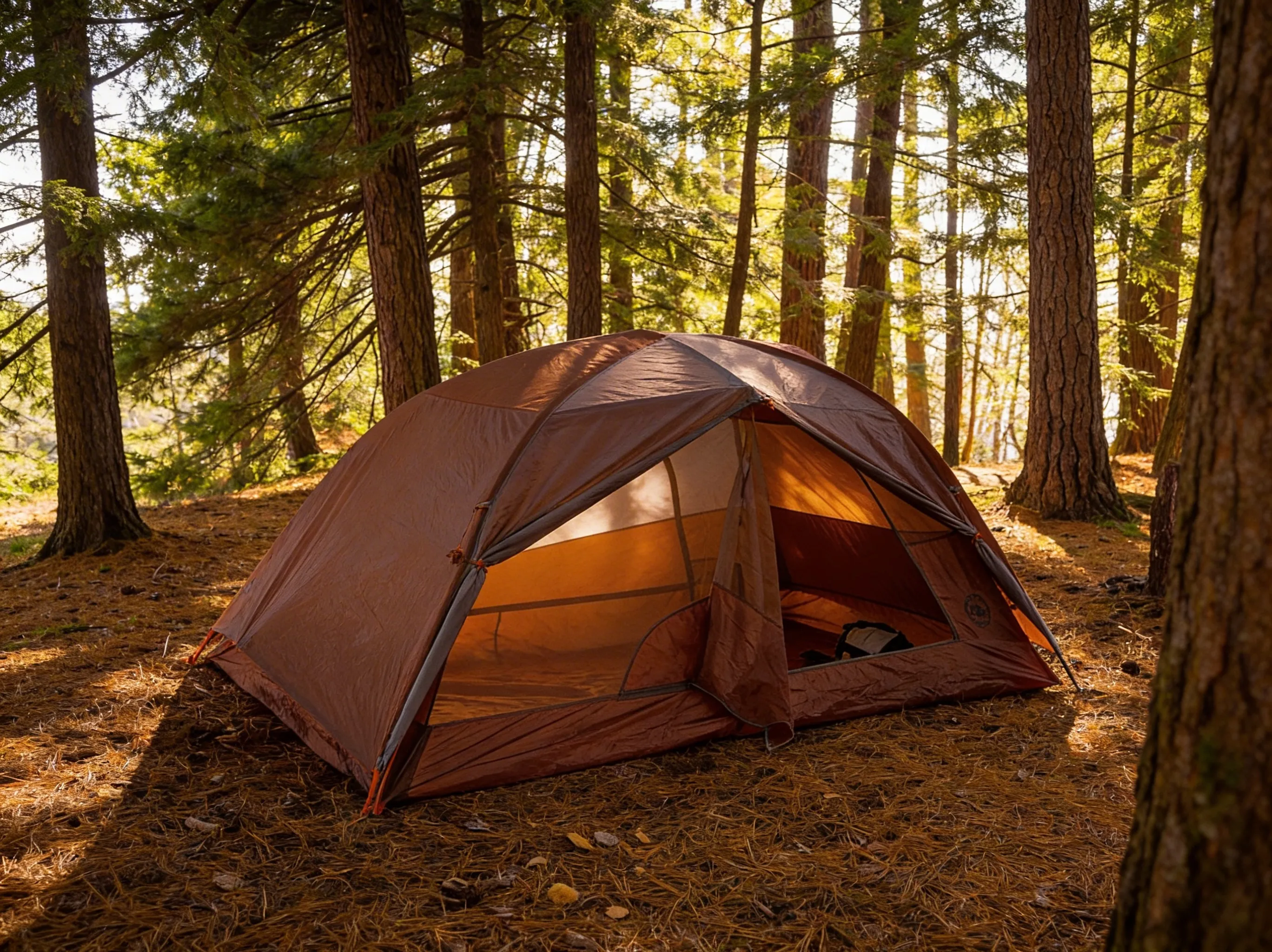
Dispersed camping is where you find the darkest skies and the quietest nights. Drive down a Forest Service road, find an established clearing, and pitch your tent.
Dark Skies (But Let’s Be Honest)
The ANF is heavily marketed for its dark skies. And they are impressive - far better than anything near Pittsburgh or Philadelphia. Rimrock and Jakes Rocks are solid spots for stargazing.
However, the “official” gold standard is Cherry Springs State Park, which is just east of the forest. Cherry Springs is an International Dark Sky Park with strict light restrictions. If you are a serious astrophotographer, go there. If you just want to see the Milky Way while camping without 500 other people, the ANF is perfect.
Photography Tips
Best Overlook Photography: Rimrock at sunset. Arrive 30 minutes early for golden hour light on the reservoir. Fall foliage peaks around mid-October (typically October 10-20). Bring a wide-angle lens (16-35mm) for the expansive views.
Best Rock Formation Photography: Minister Creek “rock city” section. Late afternoon light creates dramatic shadows between the boulders. A polarizing filter helps cut glare on wet rocks.
Best Dark Sky Photography: Dispersed camping sites away from developed campgrounds. The Milky Way is visible from late spring through fall. Bring a tripod and fast wide-angle lens (f/2.8 or faster). Best months: June-September.
Best Fall Foliage: Rimrock Overlook and Minister Creek Trail. Peak timing: October 10-20. Shoot in late afternoon for warm light.
What You Need to Know Before You Go
Cell Service is Spotty
In the deep valleys and along the reservoir, expect zero service. Download your maps offline (Google Maps or OnX) before you leave town. Tell someone your plan and when you’ll be back.
Fees Apply
While hiking is generally free, many day-use areas (like beaches and boat launches) charge a $5/vehicle fee. You can buy an annual pass ($30) if you plan to visit often.
The Reservoir is the Hub
The Allegheny Reservoir (Kinzua Dam) is the center of gravity. Most campgrounds and popular trails cluster around it. Just outside the forest, the Kinzua Sky Walk (a ruined railroad bridge turned viewing platform) is a must-visit detour.
Old Growth Exists
Visit the Tionesta Scenic Area to see a remnant of the majestic old-growth forest that once covered the entire state. A short interpretive trail takes you through centuries-old hemlocks and beeches.
Nearby Hubs
- Warren (20 miles north of Rimrock): Gateway town with hotels, restaurants, outdoor outfitters
- Bradford (30 miles east): Lodging, dining, gear shops
Best Time to Hike
- Fall (Mid-October): The hardwood forests turn brilliant shades of orange and red, typically October 10-20 for peak foliage. This is peak season. Minister Creek parking will be full by 9 AM on nice weekends. Book camping 3-6 months in advance.
- Summer (June-August): The best time for reservoir activities (swimming, boating). Trails can be hot, humid, and buggy. Bring extra water and bug spray. Dispersed camping is popular - arrive early to claim good spots.
- Late Spring (May): Wildflowers bloom, and the waterfalls on the tributaries are flowing. Crowds are thinner than summer/fall. Note that trails can be muddy and some Forest Service roads may not be fully passable.
- Winter (December-March): Solitude is guaranteed. Snow camping is possible for the prepared. Forest Service roads are not always plowed, so check conditions. Bring crampons for icy trails.
FAQ
Is camping free in Allegheny National Forest?
Dispersed camping is free. Developed campgrounds charge fees ($20-30/night) and usually require reservations via Recreation.gov.
Do I need a permit to hike?
No permits are needed for hiking. Dispersed camping typically requires no permit, just adherence to Leave No Trace principles.
Are dogs allowed?
Yes. Dogs must be on a leash in developed recreation areas. In the backcountry, voice control is acceptable, but leashing is recommended due to wildlife (bears, porcupines).
What’s the best trail for beginners?
Rimrock Trail (1.3 miles) is the best effort-to-reward ratio. For a walk in the woods without the climb, try the Tionesta Scenic Area interpretive loop.
Explore More
Ready to explore Pennsylvania’s backcountry? Start with Rimrock for the views, then plan a Minister Creek backpacking loop.
- Visit the Allegheny National Forest official site for trail maps and current conditions
- Book campsites via Recreation.gov
- Compare this to the Poconos for waterfalls and family-friendly loop hikes
- Check out the Laurel Highlands for the LHHT and Ohiopyle whitewater
- See the full PA State Parks list for more hiking ideas across the state