Boulder Field Hickory Run: Ice Age You Can Drive To
Drive or hike to this National Natural Landmark. Here's the geology, access options, and safety tips.
Quick Facts
- Location: Hickory Run State Park (Carbon County, PA)
- Size: 16.5 acres (~400ft x 1,800ft)
- Feature: National Natural Landmark (since 1967)
- Age: ~20,000 years old (last Ice Age)
- Access: Drive (5-mile dirt road) or Hike (7 miles round-trip)
- Warnings: Unstable rocks, ankle injuries, rattlesnakes, extreme heat
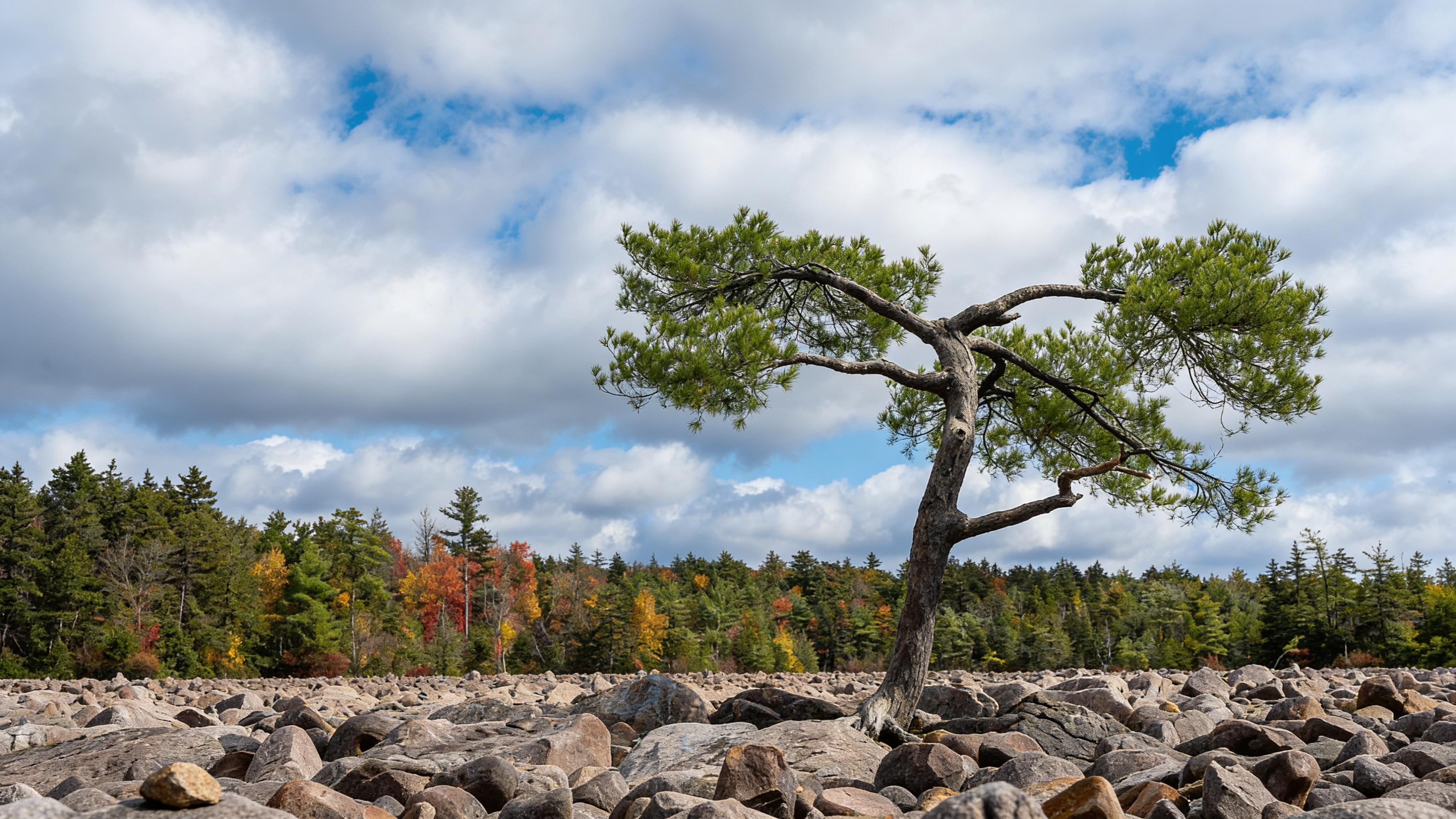
The Boulder Field at Hickory Run looks like a frozen river of rock - 16.5 acres of red sandstone boulders stretching across a valley. It’s a National Natural Landmark formed 20,000 years ago during the Ice Age. But here’s the twist: it wasn’t formed by glaciers. It was formed by periglacial processes - frost wedging and gelifluction - near the glacier’s edge. Most people drive to it via a 5-mile dirt road. Hikers can take the Boulder Field Trail (7 miles round-trip). The real challenge is walking on the field itself. The rocks wobble. Gaps swallow phones. Rattlesnakes sun themselves on hot stones. This is how to visit Pennsylvania’s Ice Age fossil without twisting your ankle.
Designated a National Natural Landmark in 1967, this is the largest boulder field of its kind in the Appalachian region. Located in Hickory Run State Park, the field remains largely unchanged for over 20,000 years. For current trail conditions, check AllTrails.
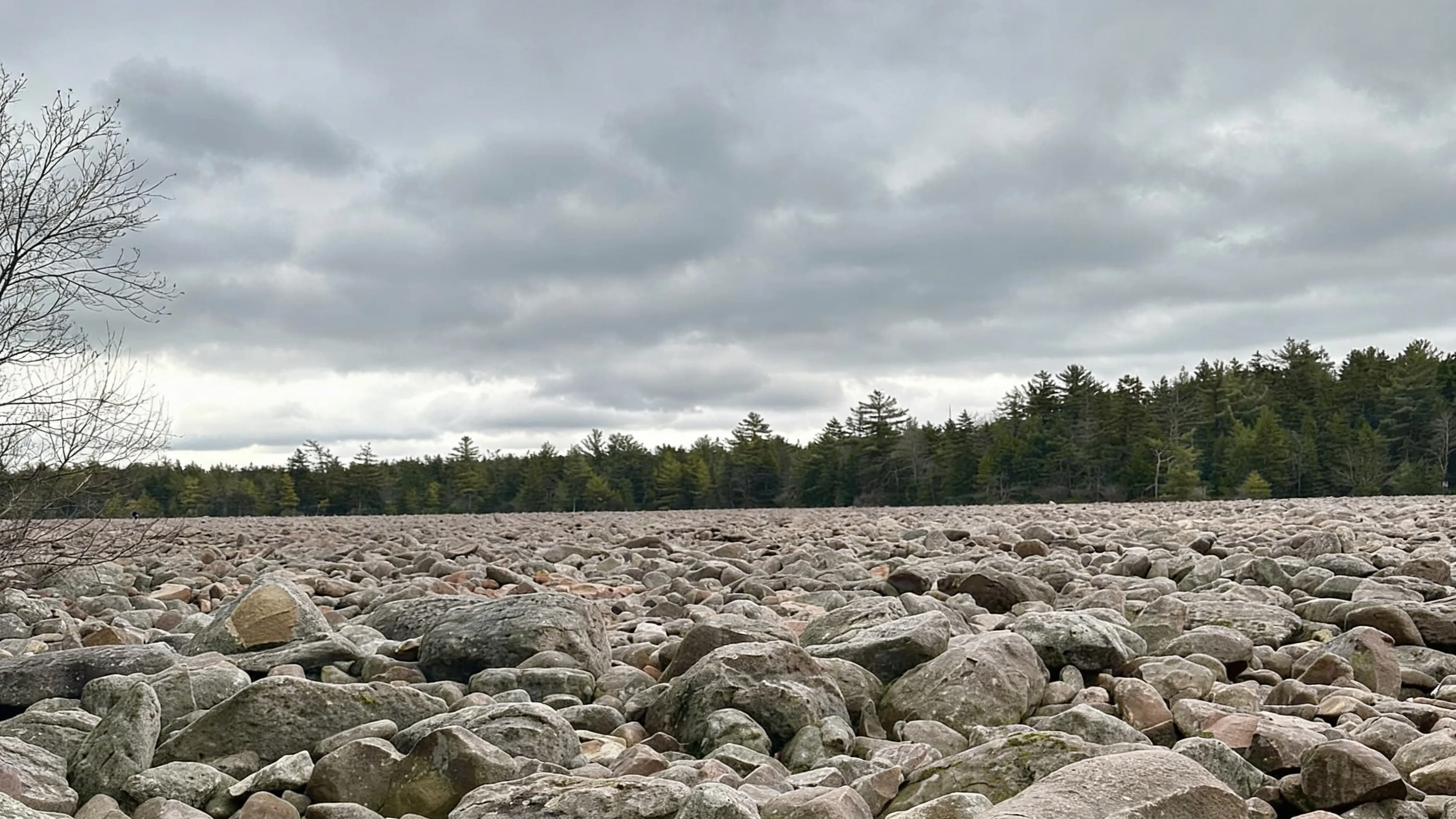 The Boulder Field stretches 400 feet by 1,800 feet
The Geology (Why It Exists)
Not a Glacier (But Close)
The Boulder Field wasn’t formed by glaciers directly. It was formed by periglacial processes - conditions near the glacier’s edge during the Ice Age. The glacier stopped just a mile away, but the climate here was frozen tundra.
How It Formed
- Frost Wedging: Repeated freeze-thaw cycles broke the bedrock ridges into jagged blocks.
- Gelifluction: These blocks slowly slid downhill on a layer of permafrost mud during summer thaws.
- Rounding: As the blocks ground against each other, their sharp edges were rounded off.
What It’s Made Of
The boulders are red sandstone and quartz conglomerate from the Catskill Formation. They are piled 10-12 feet deep in the center of the field. Some boulders are as long as 26 feet, while others exceed 30 feet.
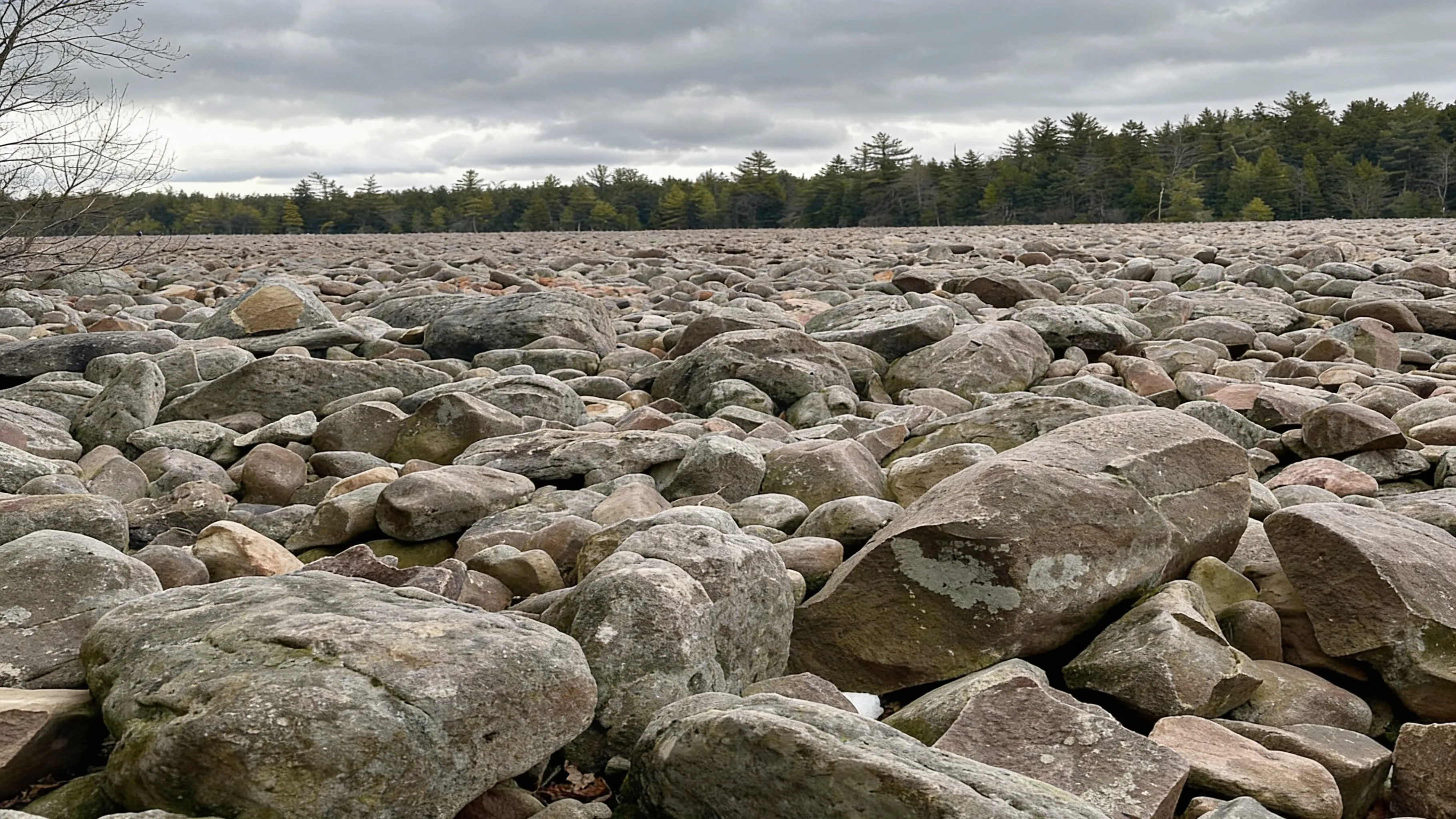 Boulders are piled 10-12 feet deep with dangerous gaps
Why It’s a “Fossil”
The climatic processes that created this field no longer happen here. It is a “fossil” landscape, frozen in time since the Ice Age ended.
How to Get There (Drive vs Hike)
Option 1: The Drive (Easy/Standard)
- Route: A 5-mile one-way dirt road loop branches off Sand Spring Road.
- Facilities: A large parking lot, restrooms, and a picnic area are located right next to the field.
- Seasonality: The road closes in winter due to ice and snow. Check the park status before driving.
- Who It’s For: Families, photographers with heavy gear, and anyone who wants easy access.
Option 2: The Hike (Moderate)
- Trail: Boulder Field Trail.
- Distance: ~3.5 miles one-way (7 miles round-trip).
- Difficulty: Moderate, with some rocky footing.
- Trailhead: Located on SR 534.
- Who It’s For: Hikers looking for a workout and solitude before reaching the crowds.
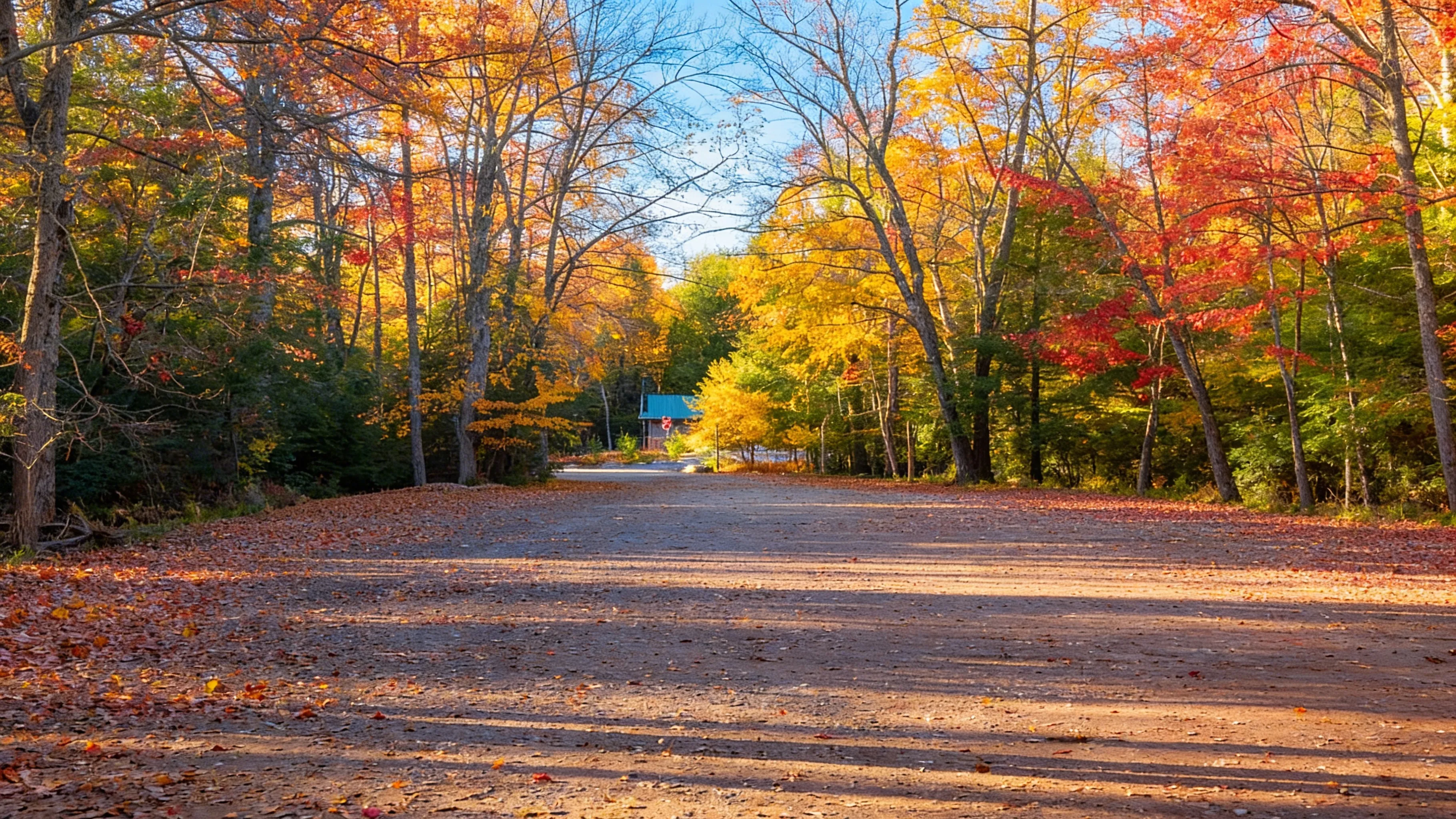 Drive to the field via 5-mile dirt road (closed in winter)
Walking on the Field (The Real Challenge)
What to Expect
The boulders range from stepping-stone size to massive automobile-size rocks. They are uneven and WILL wobble when you step on them. You need good balance and focus.
The Ankle Risk
This is the #1 injury at the Boulder Field. Rocks shift unexpectedly under your weight. One wrong step and you’re rolling your ankle or scraping your shin.
The Gap Problem
If you drop your keys or phone in a crevice, say goodbye. The boulders are piled 10-12 feet deep, and there is no way to retrieve items from the bottom. Secure loose items in zippered pockets before walking on the rocks.
Rattlesnakes
Timber rattlesnakes often sun themselves on the warm rocks. Watch where you step and be careful where you put your hands if you sit down.
The Heat
There is zero shade on the field. In summer, the red sandstone radiates heat, making the field 10-20°F hotter than the air temperature. Bring water and sunscreen.
Safety & Logistics
Footwear
Sturdy hiking boots or sneakers with good grip are essential.
⚠️ Warning: Do NOT wear flip-flops or sandals. You will get hurt.
Kids
The field is fun for older kids (8+), but it can be dangerous for toddlers. The gaps between rocks are huge and easy to fall into.
Crowds
The parking lot fills fast on summer weekends. Arrive early (before 10 AM) or late (after 3 PM).
Leave No Trace
Do not rearrange rocks or build cairns. This is a protected National Natural Landmark. Leave the rocks exactly as you found them.
FAQ
Can I drive to the Boulder Field? Yes, via a 5-mile dirt road off Sand Spring Road. Note that the road closes in winter.
Can I hike to the Boulder Field? Yes, via the Boulder Field Trail (7 miles round-trip, moderate difficulty).
Is it safe to walk on the boulders? Yes, but you must be careful. Rocks wobble and shift. Ankle injuries are common. Wear sturdy boots.
Are there rattlesnakes? Yes. They sun themselves on the rocks. Watch where you step.
Can I bring my dog? Yes, on a leash. However, the unstable, hot rocks can be tough on dog paws.
What’s the best time to visit? Spring or fall. Summer is extremely hot (no shade). The road is closed in winter.
Explore More
- Check out the full Hickory Run State Park guide.
- Visit the Poconos region.
- Explore Lehigh Gorge State Park nearby.

Oscar
Staff Writer
So glad you're here! I'm a lifelong hiker. The trails of this state have shaped who I am — from the waterfalls of the Poconos to the ridgelines of the Laurel Highlands — and in 2024 I started HikingPA to help more people discover what's out there. Whether you're planning your first hike, chasing waterfalls, or just looking for your next adventure in the Keystone State, I hope this becomes the resource you turn to. Thanks for being part of this community — I can't wait to explore Pennsylvania together.